Why We Need a Blue Christmas

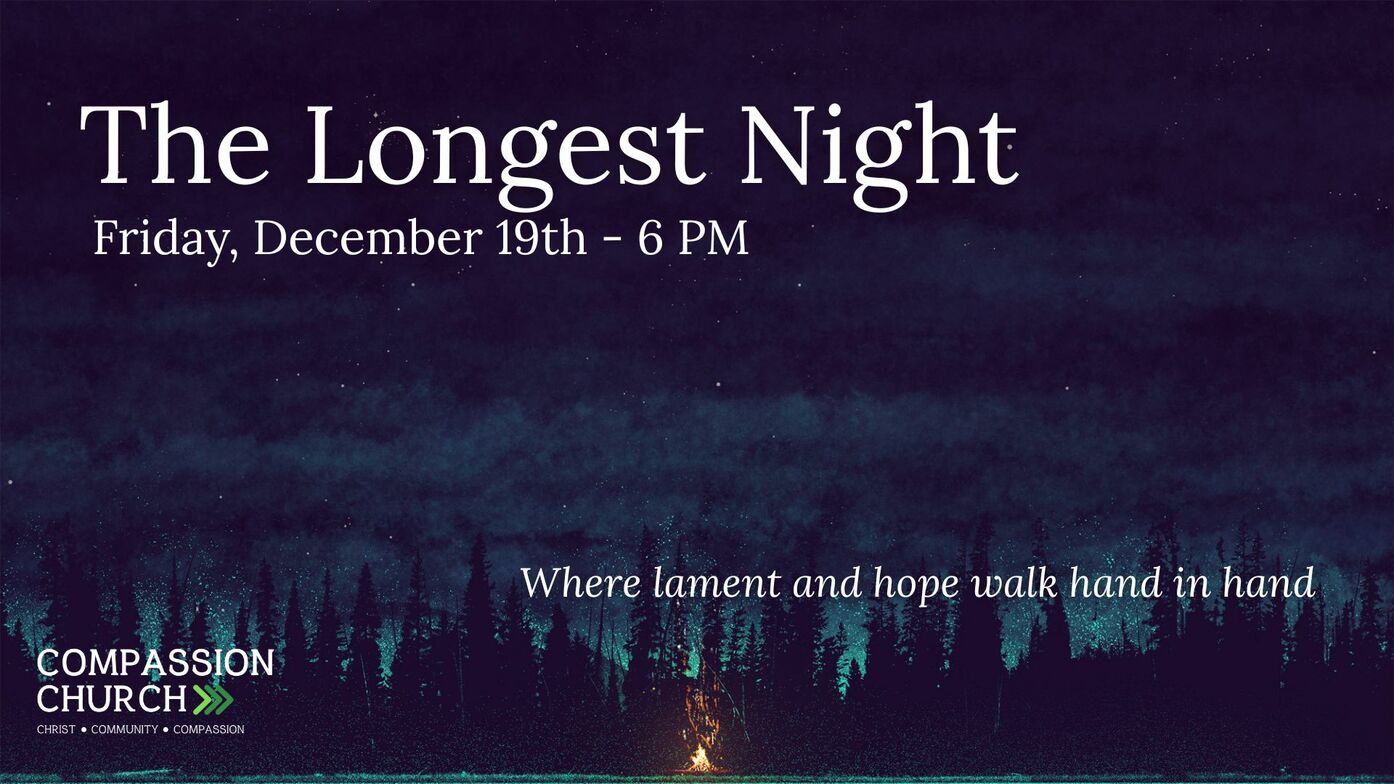
For several years, I’ve wanted to create what’s called a Blue Christmas or Longest Night service. As a campus pastor—and now as a lead pastor—I’ve had the opportunity these last few years to do that.
I get asked why. A lot. Sometimes with curiosity. Sometimes with good-natured teasing. And sometimes in ways that are condescending or well-intended but harmful (what we often call spiritual bypassing).
We’re scared to name the unpleasant—the sadness, the grief, the ugliness, the messiness of what is. We’re scared because that stuff is powerful, and I think we instinctively know it can drag you under.
But here’s what we forget: people experiencing things like grief, mental health, bodies failing, and broken relationships, and loneliness …they already know how powerful they are. Us naming it doesn’t suddenly make them aware of something they weren’t before. In fact, people living with the hard parts of life often suffer more when we fail to acknowledge and name the hard and horrible parts of life.
We leave people to suffer on their own. Isolated. Feeling like they’re the only ones. Feeling like burdens to those who love them. Feeling like maybe—just maybe—the voices in their head are right: they’re crazy, too much, or not enough or just broken beyond repair.
In the Christian world, this gets amplified. We shame people as if ... if they just had more faith, more hope, or trusted Jesus a little harder, they’d feel better ... as if their body isn’t working against them, as if their loved one didn’t die, as if the people they should be closest to aren’t the furthest from them, as if a thousand other things simply aren’t true.
And we ignore the verses that tell us that singing happy songs to a downcast person is like salt in a wound or taking their coat from them. We forget that laughter and joy doesn’t mean sorrow has disappeared. We forget that Jesus himself—knowing full well he was about to raise his dead friend from the dead and make the funeral a party—was still so overcome by grief that he stopped to weep. Do we grasp that? Jesus delayed the resurrection of his own friend to just stop and weep.
We quote Ecclesiastes about there being a season for everything, usually at funerals. But that wisdom isn’t reserved for death alone. For many of you—or your family or friends—the season to cry, scream, wail, beat their chest and holler into the heavens is right now! And it can’t wait politely for the carols to end or the cookies to be decorated.
We also forget that the Christmas story itself holds grief and horror. We tell the story with angels and stars and soft light, but Scripture also tells us about fear, fleeing, and the slaughter of children under Herod. The birth of Jesus did not happen in a world that paused its violence or pain. From the very beginning, Christmas made room for grief, loss, and the cries of mothers whose stories rarely make it onto our cards or into our songs.
And sometimes it isn’t even the big obvious things - death, broken relationships, mental health - that undo you. Sometimes it’s just the relentless hustle, the noise, even the good things of the season that overwhelm us. Sometimes what we need most is a quiet moment with no expectations—to breathe, to rest, and to say honestly, “This to-do list is too much. I’ll get to it. But for now, just let me be.”
That’s what this Friday evening is for. Our Longest Night service is simply a space where we come together in the quiet—to be still, to breathe, to name what is heavy, and to remember that we are not alone.
It’s a space where it’s okay to be sad, to struggle, to be angry or confused, or just tired and weary in body and soul. And our hope is that, in this space, you might find one small sliver of hope to hold onto when joy is in short supply—or when the smile you manage to wear is still touched by sorrow.